
Presented at the World Economic Forum in Davos last January, the Green Fiber Bottle should be the next packaging for bottled beer from the Danish brewer, Carlsberg. Made not of glass, but of wood, this bottle will be 100% biodegradable, from the bottle to the capsule. As whilst glass bottles can already be recycled, beer capsules are excluded from the classical sorting circuit and end up in household waste bins, when they are not recovered by associations. In fact, capsules are not recycled due to the low quantity of metallic material which makes them uneconomic for recycling by sorting.
Thus, Kronenbourg's subsidiary will soon adopt the Green Fiber Bottle, developed with the ecoXpac company, the Danish Fund for innovation and the Technical University of Denmark. In a press release, the brand states that "All materials used in the bottle, including the cap, will be developed using bio-based and biodegradable materials – primarily, sustainably sourced wood-fibers – allowing the bottle to be responsibly degraded".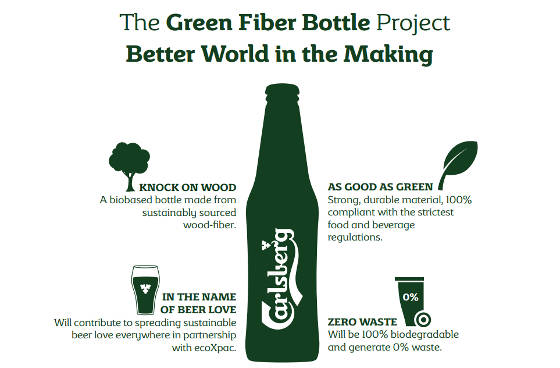
Still at the project stage, the company hopes to apply this new packaging in the next few years, thus marking a turning point in its zero waste policy. Similarly, it is possible that this initiative will be extended to all the products of the Kronenbourg group.
* Image from the Carlsberg group site : http://www.carlsberggroup.com/
News in the same category
The aim of the SILO locavore restaurant: take food back to the pre-industrial era. Between making ingredients (flour, cream, bread...), bills by mail and removing intermediaries, the chef, Douglas McMaster wants to reduce his waste to zero.
Wouldn't it be nice if your dry-cleaner could show up at your door, collect your dry-cleaning then deliver it back once ready? Well, thanks to Johnsons Cleaners, its now possible.
Morrisons announced last week the launch of a milk brand to support dairy farmers. Each bottle will cost an extra 10p per litre, directly donated to dairy farmers.
Marks & Spencer continues to inject fresh blood into its clothing lines, with the upcoming release of a small yet bold collection inspired by hipsters and made out of recycled fabrics.