
 Marine pollution is no longer a secret, and the plastic continents formed in the oceans are unfortunately continually expanding. But numerous initiatives are being launched mixing ecological and commercial projects.
Thus, Ben, David and Kevin launched Net Positiva, an initiative based in Chile aiming to collect fishing waste along the coasts. The association collects and recycles fishing nets, representing more than 10% of the waste rejected into the oceans, due to a lack of means for craftsmen to recycle them.
From there, all that was needed for the three young men was to find an idea to make these recycled nets into a new object. The nets are sorted and shredded, to obtain a new life and become skateboards. To produce them in Santiago (Chile), the three Net Positiva creators once again took things in hand by creating the company, Bureo, and a skateboard model.
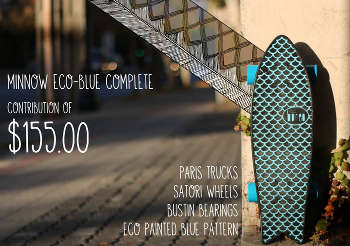
In the form of a fish, "The Minnow" presents itself as a product combining eco-responsability, robustness and practicality, with the board comprising around 9 square metres of fishing nets. Whilst the young start-up makes its own boards, it has called on recognised brands for the rest of the "Minnows" parts. The wheels are made by Satori from 30% vegetable oils and recycled materials. The fixing systme is by Paris Trucks. Seeing the skateboard as a real means of transport, Bureo has also added a simple attachment, where you can attach an anti-theft device.
Having collected more than 61,000 dollars in crowdfunding on Kickstarter, Bureo is currently shipping its first skateboards. In addition, "The Minnow" is also on sale on Bureo's e-shop, at the price of 149 dollars (around 117,60 euros).
* Photo from the Bureo Kickstarter page
News in the same category
In addition to being located in the heart of the Huis Ten Bosch theme park in Japan, the future Henna-na hotel will have the specificity of employing humanoid robots, whilst room access keys and cards give way to facial recognition.
Smaller Footprints is a new shop in Clifton in Bristol with a zero waste ethos at its heart. Located in Regent Street, the new shop offers a varied range of food and non-food items packaging free.
With their large zip-closed mouths, Avale-Soucis are funny little monsters destined to store young children's drawings and secrets, and also their fears.
Tested by the Swiss Post Office during 2013, the "SMS Stamp" lets you pay postage on letters using a mobile telephone. By sending an SMS to a dedicated number, the client receives a code to indicate on the envelope.