

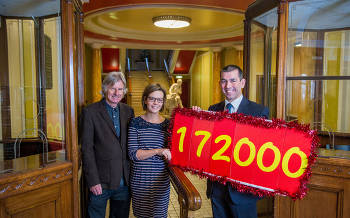
 The 5p plastic bag charge was introduced in Scotland in October 2014. This charge was first created for environmental purposes, and the money raised was intended to finance national projects as well as local initiatives. In Scotland, Asda has partnered with Social Investment Scotland (SIS) to redistribute the carrier bag funds to various community projects. So far, just over a year after the charge was introduced in Scotland, Asda and SIS have financed nearly £700,000 worth of grants and loans to 160 local charities and community plans. In the meantime, the use of plastic carrier bags has dropped by 90%.
The last round of funding enabled SIS to provide £172,000 in loans to several initiatives: the Leith Theatre renovation in Edinburgh, the Bay Tree Community Café, Highland Perthshire Media and Venture Mor. More good causes will benefit from the funding through Foundation Scotland, which received half the proceeds to help nominated plans around Asda stores in Scotland.
"Our stores are often the cornerstone of the communities we serve and we’re committed to ensuring that this policy has long-term social, as well as environmental, benefits" said Allan Miller, Senior Director for Asda Scotland. "It’s fantastic to see the huge number of Scottish community groups and social enterprises that have benefited from the £700,000 proceeds raised over the last year and I can’t wait to see what’s next."
Photo: Asda news
News in the same category
From London to Canberra, passing by Paris and Ottawa, consumer associations have begun protest campaigns to reduce the tax applied to sanitary towels, tampons, menstrual cups and other sanitary protection.
Bionic Yarn is tackling ocean pollution by creating textile fibres from plastic waste collected at sea. For its first collection, it has worked with G-Star Raw and now counts Pharell Williams in its team.
Specialised in professional deliveries without CO2 emissions, the Cities Fundation deploys its Foodlogica project and its scooters in Amsterdam. Able to transport up to 300 kilos of local products, these bicycles use green electricity.
H&M is about to launch the very first Fashion Recycling Week, from 31 August to 6 September. The fashion retailer asked the London College of Fashion to be part of the project.