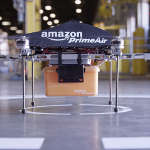
If the image of skies filled with a multitude of flying engines is recurrent in the science fiction universe, the reality could soon catch up with fiction. To deliver more products, faster, Amazon has developed the delivery system by drone, Amazon Prime Air. Able to transport up to 2.5 kilos of products, the brand's drones have been designed to deliver small objects and books, which represent 86% of purchases on its internet site, according to Jeff Bezos, the company's founder.
Within a range of around fifteen kilometres and in less than 30 minutes, the Amazon drones could drop customers' orders directly in front of their doors or on their window sills. Whilst the e-commerce giant is working to optimise the technology of its system, the main problem up to now was obtaining flight authorisations for its devices.
Examined by the American authorities, Amazon's project puts several issues on the table. The deployment of a delivery service by drone by an e-commerce giant such as Amazon poses the question of air safety. If this system is implemented, the sky of the major American cities could find itself inhabited by clouds of small delivery drones that could disturb the circulation of civil or military aeroplanes.
In 2013, Amazon filed an authorisation request with the American authorities to be able to test its devices outside of its sites and private warehouses. The Federal Aviation Authority (FAA) has just issued an authorisation to the web giant, which becomes the 2nd company, with the CNN television channel, to fly private drones. However, the devices are not authorised to fly at night or over 140 m altitude, to avoid disturbing air traffic. Similarly, no question of letting the drones out of eye-sight, they must remain within sight of their pilots. Finally, each flight and incident must be communicated to the FAA by the company during the authorised test period.
* Photo from the Amazon website: http://www.amazon.com/
News in the same category
It is no use looking for a bottle of wine in BiBoVino stores, as bottles have simply been replaced by Bag-in-Boxes (BiB) of 3 or 5 litres. However, the store makes a point of selecting quality wines.
A baby has only one way of communicating his or her needs: crying. The "Cry Translator" application and baby phone from Biloop takes care of translating them for young, despairing parents.
Driverless car sector is growing fast and numerous countries already have their own autonomous vehicles. But these usually run on dedicated tracks, while London's driverless cars will run on actual streets.
After a trial period in more than 100 stores, Morrisons plans to expand its food waste program to its whole network across the country.